THL Resources
LUTHL4EEE is an assignment/experiment given to students in order to be achieved at home or outside of the classroom or laboratory environment. The students are usually provided with materials and guidelines to conduct experiments. LUTHL4EEE will enhance student learning experiences by implementing experiments using Arduino kits with sensors for smart systems and smart control mainly smart home automation.
University
Lebanese University
Targeted Groups
- Undergraduate students are targeted.
- The study program of the Electrical and electronics Engineering diploma.
- First year of Electrical and electronic Eng.specialty, semester 6 (spring)
THL Components
Overview of the concept and key components
The Lebanese University Take Home Lab for Electrical and Electronic Engineers (LUTHL4EE) allows engineer students to use device (such as an Arduino or and sensors ) to realize projects to control and /or react to a specific system.
Examples:
- Use case with Arduino and Flame sensor in order to detect the fire and generate Fire alarm.
- Use case with Arduino and ultrasonic sensor in order to detect an obstacle and/or measure the distance to an obstacle.
- Use case with Arduino and Fan blade with DC motor to run the fan according to a specific pattern
- Use case with Arduino and stepper motor to control the motor following a specific pattern
- Use case with Arduino and stepper motor to control the motor with remote
Training Material
The prepared training materials consist of appropriate experiments covering 3 mains categories:
- Using Arduino to collect data from a device such as sensors
- Using Arduino to control specific device such as actuators, motors or other
- Using Arduino to collect data from a sensor and then react by controlling a specific device/system according to the collected data.
View training materials
Instructions
- Introducing the Arduino and the required programming skills and related interfaces, in addition to the concept of smart control and smart systems such as home automation.
- Distributing the LUTHL4EEE kits to the students and let them be familiar with the different components.
- Giving Assignments to be done by the students at home using the LUTHL4EEE kits and returned with a report and video.
- Specifying mini-project to be done by the student using the LUTHL4EEE kits in addition to other components.
- Evaluation of the mini-project with a report and presentation.
Experiments
- Controlling servo motor with MPU-6050 Sensor
Coupled with a servo motor, which is a type of rotary actuator, the setup aims to demonstrate how changes in orientation detected by the MPU-6050 can be translated into corresponding movements of the servo motor.
Use cases for the labs (examples, experimentation, projects,....)
THL Implementation steps
- Introducing the Arduino and the required programming skills and related interfaces, in addition to the concept of smart control and smart systems such as home automation.
- Distributing the LUTHL4EEE kits to the students and let them be familiar with the different components.
- After introducing the LUTHL4EEE kits and familiarizing students with Arduino and the kits components.
- The experiments conducted by students as assignment.
- The prepared appropriate experiments for the assignments for the LUTHL4EEE cover 3 mains categories:
- Using Arduino to collect data from a device such as sensors
- Using Arduino to control specific device such as motors or other
- Using Arduino to collect data from a sensor and then react by controlling a specific device/system according to the collected data.
- Specifying mini-project to be done by the student using the LUTHL4EEE kits in addition to other components.
Curriculum
Link to the existing and planned curriculum and/or experiment categories
The LUTHL4EEE will be integrated within the modules of Eng. Projects (code SHS 307, SHS410, SHS412).
60 Students practically apply the knowledge acquired during their courses/labs to carry out a project (e.g. home automation)
Adapted courses which take advantage of RL/THL equipment (Current update)
Communication and mini-project (Course code SHS307)
- The THL v is used within this course during the spring semester 2024.
- Well defined smart systems using the provided kits
- All students actively participated and showed interdisciplinary learning from previous courses.
Status of THL availability for the students
- The LUTHL4EEE kits are available for the students during the semester period.
- The experiments conducted by students as assignment
- Presentations given by the students
- Mini-projects are developed by the students as part of the implementation of the THL concept in SHS307 course
- A local workshop is done at the end of the spring semester to present the different projects
Students Trained
Status update of Training materials
- Appropriate experiments are prepared for the assignments for the LUTHL4EEE
- The training materials are tested during the first implementation and currently considered as developed.
Status Update, Training of students (examples of trainings done, ToT, workshops, ....)
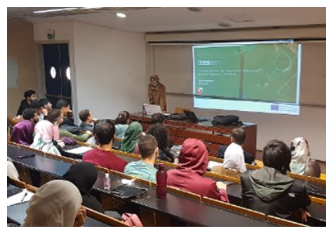
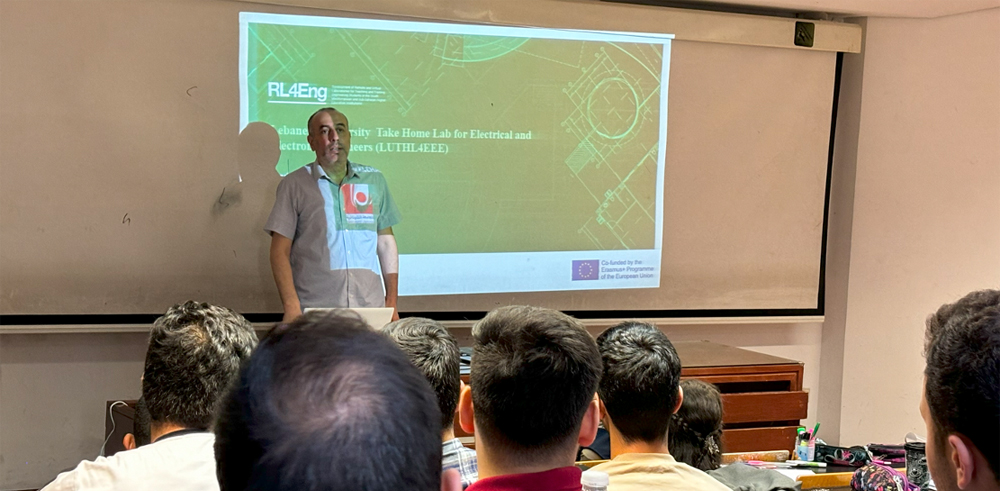
- A local training is done for the students of the third year of Electrical and electronics engineering.
- The training focusing on Arduino installation, features and programming as introduction to use the LUTHL4EEE
- Output: familiarizing students with Arduino and the kits components
Most significant value created by having students use your lab experiments
The THL LUTHL4EEE will allow them great efficiency and flexibility in carrying out their project.
They could use THL at home and test as often as they need without the time pressure of a time scheduled laboratory.
Students Feedback
Pre-Survey for Take Home Labs (THLs)
Post-Survey for Take Home Labs (THLs)
- The implementation of the LUTHL4EEE was positively received by students.
- They tested as often as they needed without the time pressure of a time scheduled laboratory leading to a significant improvement in their understanding of smart automation concept and other smart systems concepts.
- Understanding of concepts and their application in practical cases,
- Flexibility in scheduling,
- They can progress to working with more sophisticated devices and projects.
- The LUTHL4EEE will allow them great efficiency and flexibility in carrying out their FYP project.
- Encouraging independent thinking and problem-solving skills
Instructors/staff Feedback
Didactical needs
- Ensuring that the instructions are clear, so students can complete the tasks at home
- Required tasks should be related to the topics covered in lectures
- Clear assessment criteria to ensure students understand how their work will be evaluated.
Obstacles or limitations
- In case of high students numbers involved and when available kits for THL are not enough, instructors might suggest creating a list of accessible alternatives.
- Group take-home labs can sometimes lead to coordination issues
Lessons Learned
- Through this THL, it was possible to show the direct link between theoretical knowledge and real-world application, demonstrating the practical importance of concepts learned in class.
- Another lesson related to overcome challenges (software or hardware) related to the THL Tasks. This lesson prepares students for the real-world engineering problems.
Contact Information
Email: samhat@ul.edu.lb
Photos