RL Resources
The remote lab will be within the planned curriculum for the computer engineering department at which it will be used to enrich the students' knowledge via projects to support the students in getting in depth with the concepts and will be available for other departments as well such as electrical, electronics, communications, biomedical and bioinformatics engineering.
University
Yarmouk University
Targeted Groups
The target group includes graduate and undergraduate students, researchers, teachers, and lab engineers. Researchers, teachers they need access to the lab system along with some data in regards to the labs and their use. Lab engineers need access and a way to provide feedback and also means of lab maintenance. Students need access through a portal and a way of communication and getting feedback of lab availability for their use among others
RL Components
Overview of the concept and key components
Setup a remote lab with the weblab deusto remote lab management system (RLMS). Prepare the different configuration files of the webleb deusto and how to implement a lab as a remote lab into the RLMS. FPGAs contain configurable logic blocks (CLBs) and a set of programmable interconnects that allow the designer to connect blocks and configure them to perform everything from simple logic gates to complex functions. A software component is also needed.
The interface need to be user friendly. Number of users will be based on the students enrolled in the labs each semester. A feedback and a communication mechanism is needed and students are directed through several guidelines on the interface on the lab use. A maintenance mechanism is also needed.
A user interface and an input and output interface mechanism is needed along with a feedback and communication interface.
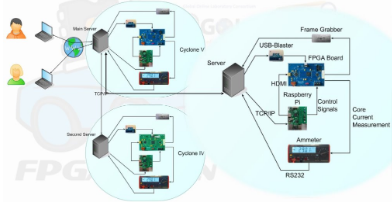
Visual representation of use cases
The lab will be implemented as a project based lab at which students will enrich their teaching experience as a supportive way of learning. A user case adapted from H-BRS website is shown below
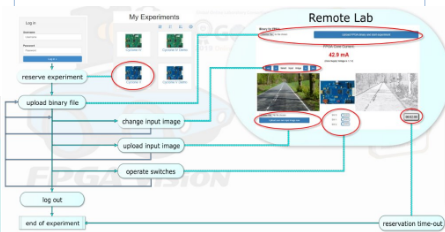
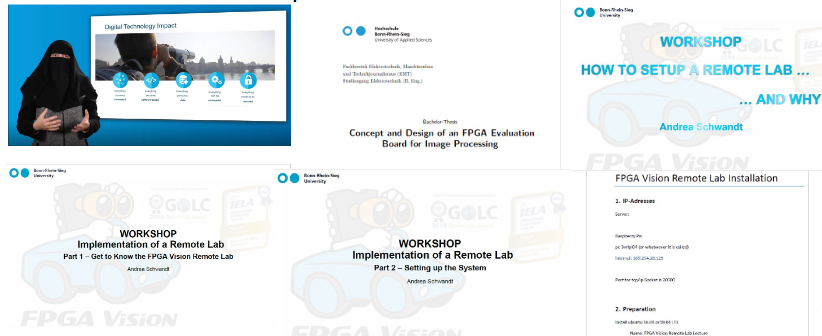
Training Materials
Use cases for the labs (examples, experimentation, projects,....)
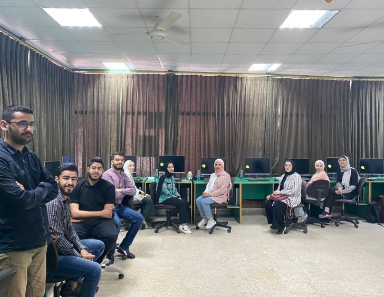
Status update of Training materials
All training materials and the lab manual are available for the students
Download
Curriculum
Link to the existing and planned curriculum and/or experiment categories
The remote lab will be within the planned curriculum for the computer engineering department at which it will be used to enrich the students' knowledge via projects to support the students in getting in depth with the concepts and will be available for other departments as well such as electrical, electronics, communications, biomedical and bioinformatics engineering example of courses include: CPE542 Principles of embedded systems, number enrolled 50 each semester, CPE545 computer architecture and embedded systems lab number enrolled 50 each semester, CPE544 principles of assistive technology number enrolled 50 each semster, master courses include: CPE620 Embedded systems, CPE621 design of digital systems using FPGAs, CPE622 digital hardware design using VHDL, CPE623 real time embedded systems number enrolled in each is around 20 students each semester.
Adapted courses which take advantage of RL/THL equipment
Example of courses using FPGA
- CPE542 Principles of embedded systems, number enrolled 50 each semester
- CPE545 computer architecture and embedded systems lab number enrolled 50 each semester
- CPE544 principles of assistive technology number enrolled 50 each semester
Master level
courses include:
- CPE620 Embedded systems,
- CPE621 design of digital systems using FPGAs,
- CPE622 digital hardware design using VHDL,
- CPE623 real time embedded systems number enrolled in each is around 20 students each semester
Example of courses using HPC
- CPE544 Principles of assistive technology numbers enrolled each semester could be 50 students
- BMIE 558 Advanced bioinformatics programming
- BME
646 Advanced Biomedical informatics programming numbers enrolled each
semester could be 50 students)
Students Trained
Status Update, Training of students (examples of trainings done, ToT, workshops, ....)
Several training sessions have been done
Most significant value created by having students use your lab experiments
Several experiments will be conducted including the ability to use the lab in the computer , electrical, electronics, communications, biomedical and bioinformatics engineering at which students will be engaged with the FPGA. Students will Learn state of the art technology in their field of study , Enhance their digital competencies and Engage with a new learning environment to become professional practitioners and advocates to teach others.
Students Feedback
Pre-Survey for Remote Labs (RLs)
Post-Survey for Remote Labs (RLs)
Instructors/staff Feedback
Didactical needs
- Training of instructors on best practices to run and maintain the labs
- Follow up with respect to the students assignments and providing them with the respective feedback accordingly.
- Lab access issues to be resolved
- Lab manuals to be detailed to help the students understand the respective outcomes
- Link the lab use to practical applications
Obstacles or limitations
- Logistics with respect to the procurement orders
- Follow up with respect to the training Materials
- Establish a dashboard for students feedback and Q and A
- Follow up with respect to the lab use for all partners in the project
- Consider any lab access issues
Lessons Learned
- Purchase orders to be placed ASAP
- Training material to be prepared ahead of time
- Dashboards for students Q and A
- Consider improvements for next coming semsters
- Promote the use of the labs using more mediums
- Consider the maintenance of the labs
- Provide more practical cases for labs use
Contact Information
Email: ameera.almomani@yu.edu.jo